
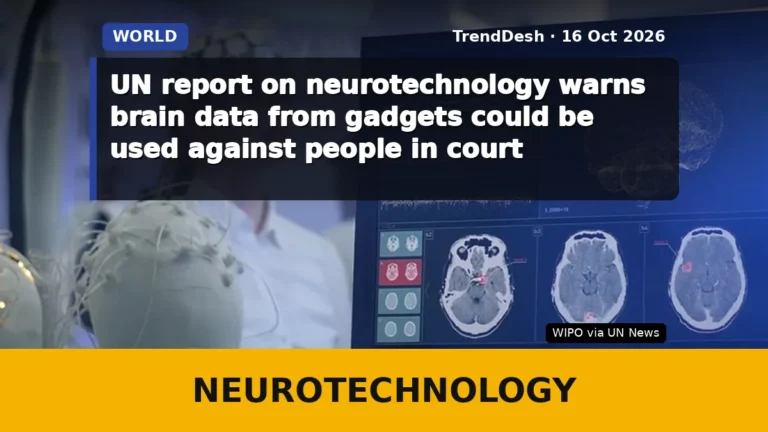
A UN report on neurotechnology presented to the General Assembly on 15 October 2026 warns that brain signals recorded by a gaming headset or a wellness gadget could one day be used as evidence against people in court. It says the technology is moving faster than the laws meant to protect human rights.
What the UN report on neurotechnology says
Senior UN human rights official Claudia Fuentes Julio presented the Secretary-General’s report to the Assembly’s Third Committee. She said the technology could threaten privacy, freedom of thought and the right to a fair trial, especially for marginalised people. Neurotechnology was once used only for medical diagnosis and treatment, to measure, monitor, analyse or modulate the nervous system. It now gathers neural data, defined as information about the structure, activity and function of the nervous system. The report examines its growing use in justice systems and the risks of combining it with artificial intelligence, according to UN News. ‘Neurotechnology accesses, measures and analyses brain signals,’ the Secretary-General wrote.
Key Facts
- Presented: UN General Assembly Third Committee, 15 Oct 2026
- Presented by: UN Assistant Secretary-General Claudia Fuentes Julio
- Main risk: brain data used as evidence in court
- Rights at stake: privacy, freedom of thought, fair trial
- Ask: ban coercive uses, consent, oversight, data protection
Neural data from wellness and gaming devices
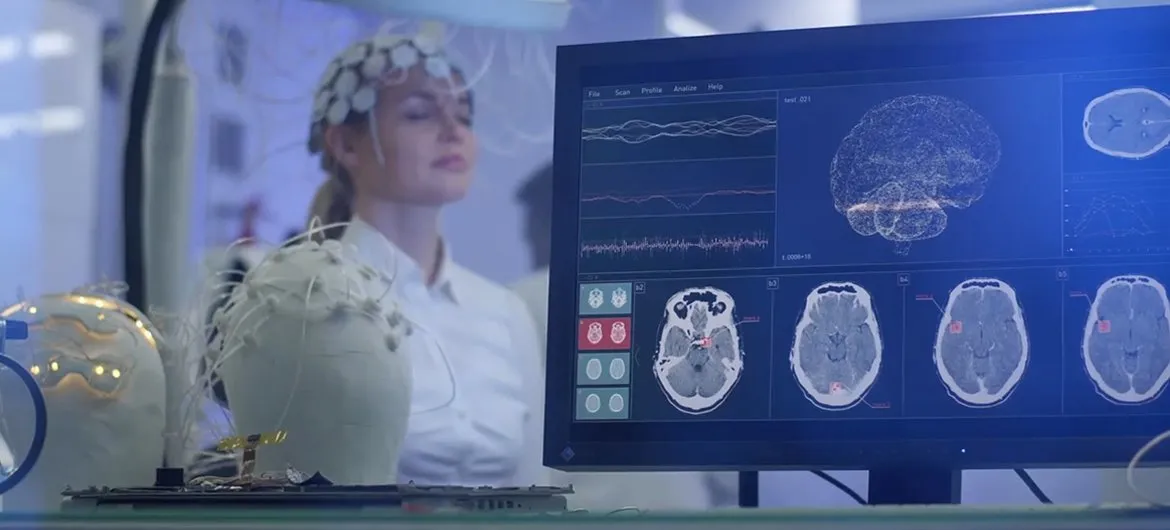
Devices that were once limited to clinics and labs are entering, or may soon enter, consumer markets, workplaces, schools, public services, law enforcement and courts, the report found. Wearable electroencephalography (EEG) headsets are now widely sold for wellness, gaming and productivity. Neural data collected through these devices could be accessed by governments or used in legal cases without proper recognition of how sensitive it is, the report warned. ‘If these signals are treated as direct indicators of thoughts, intentions or truthfulness, the use of neural data points could undermine how we understand and value each of us as human beings,’ the Secretary-General wrote.
Human rights safeguards the UN wants
The report calls for ‘prohibitions on coercive and abusive uses, and stronger safeguards, informed consent, scientific validation, oversight, accountability and protection of neural data,’ Fuentes Julio said. It describes neural data as ‘uniquely sensitive personal data’ that needs extra protection. Fuentes Julio also pointed to the growing commercial use of the technology and the large amounts of neural data being collected by tech companies. Inside BCI, a site that tracks brain-computer interfaces, reported that the report recommends banning coercive use of neurotechnology in justice systems. The report says the technology holds real promise for medical and assistive uses. But in courtrooms it serves different purposes and carries distinct legal and human rights risks, especially when tools and data built for medicine are reused without proper safeguards, it argues. The report’s findings are set out in the UN News article and the Secretary-General’s report itself.
Source: UN News · Inside BCI
Today’s News 16 Oct 2026 · 21 stories
 1Rajnath Singh warns of white-collar terrorism and lone-wolf attacks at Defence ConclaveOct 16, 2026
- 2Asian Games 2026 review: Mandaviya tells federations India needs ’10 more Mirabai Chanus’Oct 16, 2026
- 357th GST Council reforms: CBIC chief explains end of GST arrests and faster refunds in HyderabadOct 16, 2026
- 424 Speed Post reaches Ahmedabad: next-day document delivery to Mumbai or a full refundOct 16, 2026
- 5Indian Maritime University convocation: 1,993 graduate in Chennai, including 1,605 seafarersOct 16, 2026
- 6Chennai Port marks 145th Port Day after record 57.90 million tonnes of cargo in 2025-26Oct 16, 2026
- 7Sikkim Ayurveda institute: CM Tamang lays stone for 50-acre wellness centre at LungchokOct 16, 2026
- 8Bhajanlal Sharma meets PM Modi in Delhi, then takes water and power projects to Patil and JoshiOct 16, 2026
- 9Jaswant Pashu Mela opens in Bharatpur: 107th edition of the 1920 fair already earns over Rs 1.17 croreOct 16, 2026
- 10Rajasthan Police starts ‘Positive Behaviour in Policing’ training to change how stations treat peopleOct 16, 2026
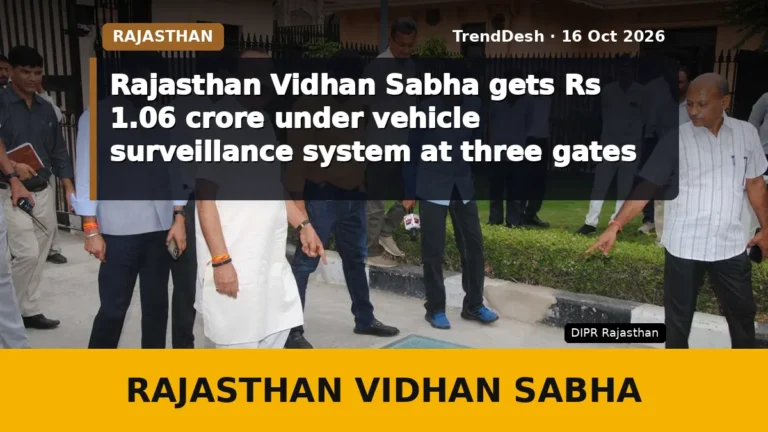
- 11Rajasthan Vidhan Sabha gets Rs 1.06 crore under vehicle surveillance system at three gatesOct 16, 2026
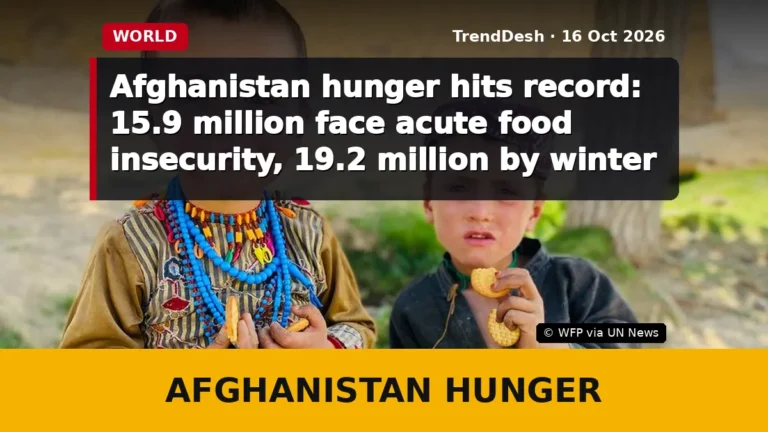
- 12Afghanistan hunger hits record: 15.9 million face acute food insecurity, 19.2 million by winterOct 16, 2026
- 13WHO Ukraine warehouses hit four times since July, destroying $1.5 million of medicinesOct 16, 2026
- 14Kenya Ebola: second case confirmed in relative of first patient, WHO says no community spreadOct 16, 2026
- 15WHO: lead poisoning causes over 3.5 million deaths a year, yet half of countries lack paint limitsOct 16, 2026
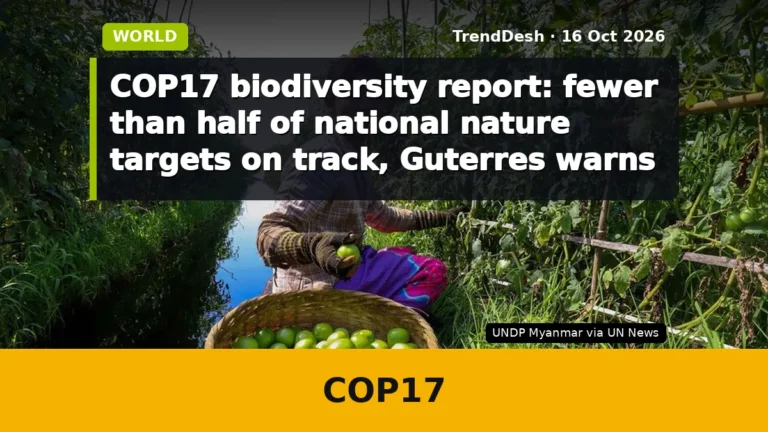
- 16COP17 biodiversity report: fewer than half of national nature targets on track, Guterres warnsOct 16, 2026
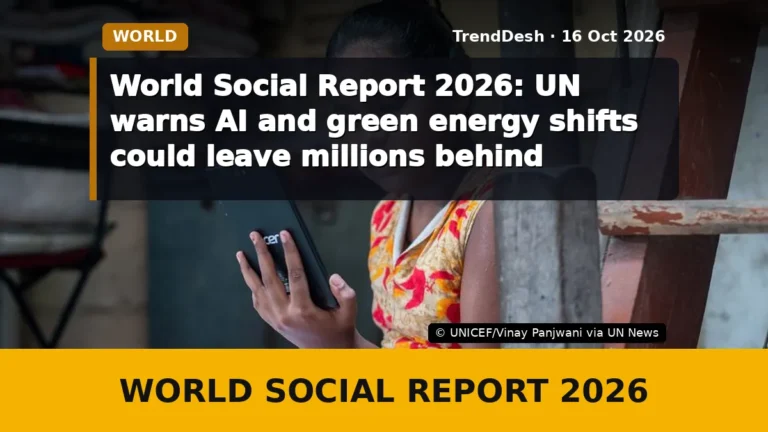
- 17World Social Report 2026: UN warns AI and green energy shifts could leave millions behindOct 16, 2026
- 18UN report on neurotechnology warns brain data from gadgets could be used against people in courtOct 16, 2026 · Reading now
- 19Artemis II heat shield: NASA finds just 9 char-loss spots against 103 on Artemis IOct 16, 2026
- 20El Nino 2026: NASA satellites track what may be the strongest El Nino since 1950Oct 16, 2026
- 21Hurricane Isaias: NASA night images show lights going out across Florida Panhandle, then returningOct 16, 2026












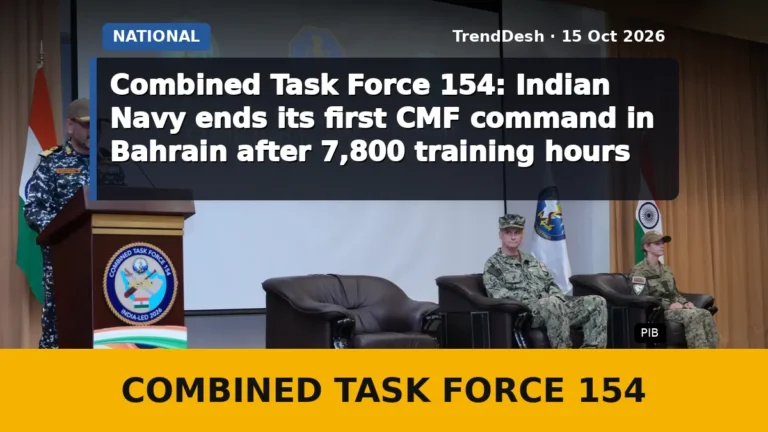
Combined Task Force 154: Indian Navy ends its first CMF command in Bahrain after 7,800 training hours
Combined Task Force 154: the Indian Navy handed over command in Manama on 14 October after an eight-month tenure with 7,800+ training…
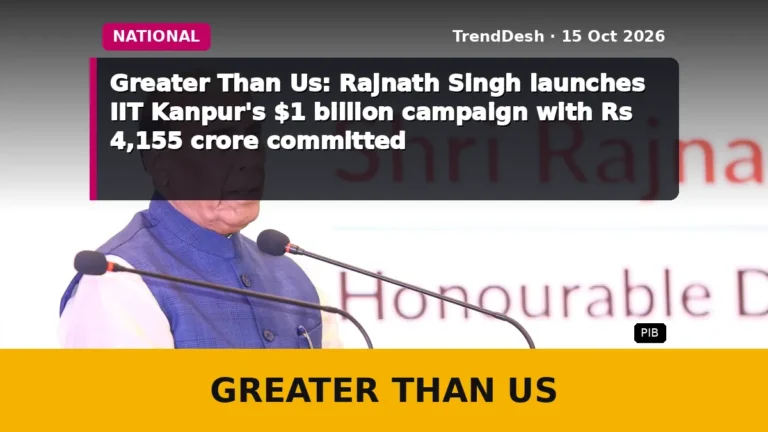
Greater Than Us: Rajnath Singh launches IIT Kanpur’s $1 billion campaign with Rs 4,155 crore committed
Greater Than Us, IIT Kanpur's US$1 billion fundraising campaign, was launched by Rajnath Singh in New Delhi with Rs 4,155 crore already…
Inherited cancer risk found in nearly 30% of tested patients at Homi Bhabha Cancer Hospital, New Chandigarh
Inherited cancer risk: Homi Bhabha Cancer Hospital, New Chandigarh, found mutations in nearly 30% of 912 tested patients, mostly breast and ovarian…
World Standards Day 2026: BIS launches Silver Refinery Scheme to hallmark silver bars and coins
World Standards Day 2026: Pralhad Joshi launches the BIS Silver Refinery Scheme for silver bars and coins, with three purity grades and…

Asian Para Games 2026: SAI Gandhinagar sends off para powerlifters Jhandu Kumar, Seema Rani and team
Asian Para Games 2026: SAI Gandhinagar gives four Indian para powerlifters, including CWG bronze medallist Jhandu Kumar, a send-off before Aichi-Nagoya.

India Brunei trade talks: third Joint Trade Committee targets farm exports, pharma and energy
India Brunei trade: the third Joint Trade Committee reviewed market access, farm and animal product exports, and named pharma, healthcare and energy…

Bhilai Steel Plant replaces 129-tonne converter hood at SMS-3 without an overhead crane
Bhilai Steel Plant has replaced the 129-tonne, 52.5-metre hood of Converter-1's gas cooling system at SMS-3 for the first time, without an…
Rajasthan cabinet passes resolution hailing PM Modi’s 25 years as head of government
Rajasthan cabinet passes a resolution on PM Modi's 25 years as head of government; CM Bhajanlal Sharma lists expressways, solar power, jobs…
Amrita Haat Jaipur: Diya Kumari tours 170-stall women’s fair, pushes SHGs to sell online
Amrita Haat Jaipur: Deputy CM Diya Kumari visits the 170-stall SHG fair at Jawahar Kala Kendra and orders digital marketing training for…
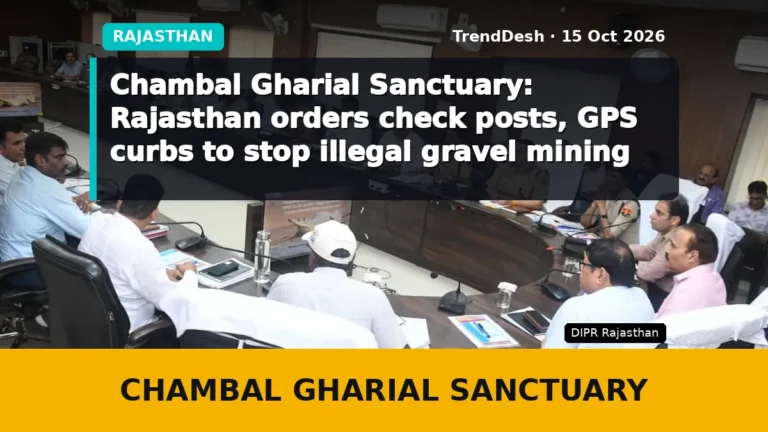
Chambal Gharial Sanctuary: Rajasthan orders check posts, GPS curbs to stop illegal gravel mining
Chambal Gharial Sanctuary: ACS Anand Kumar orders patrols, mobile check posts, CCTV and GPS on heavy vehicles in Kota and Bundi to…
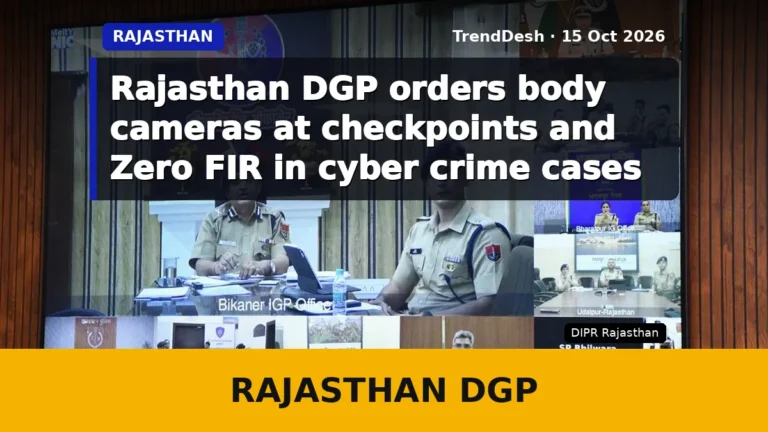
Rajasthan DGP orders body cameras at checkpoints and Zero FIR in cyber crime cases
Rajasthan DGP Rajeev Kumar Sharma orders body cameras at checkpoints, Zero FIRs in cyber crime cases and security plans for panchayat polls…
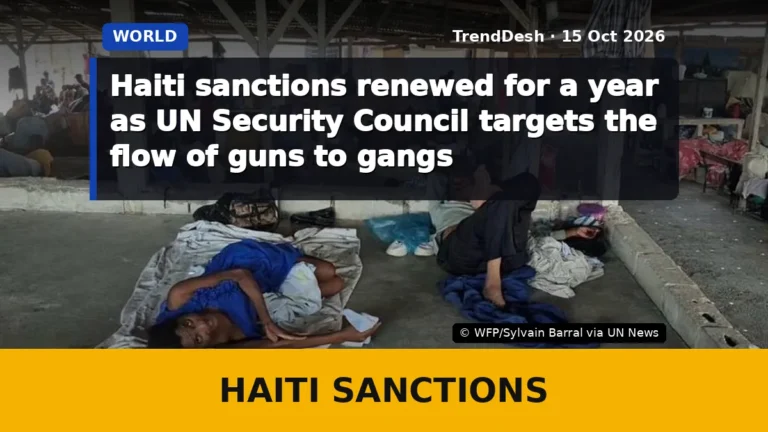
Haiti sanctions renewed for a year as UN Security Council targets the flow of guns to gangs
Haiti sanctions renewed for one year: the UN Security Council keeps its arms embargo, travel ban and asset freeze as gang violence…

DR Congo cholera cases top 125,000 as the country also battles an Ebola outbreak, WHO warns
DR Congo cholera: WHO reports more than 125,000 suspected cases and 3,644 deaths since January 2025, as an Ebola outbreak strains the…

Yemen fighting cuts off food aid to 800,000 people as WFP warns of catastrophe in Taiz
Yemen fighting has cut off WFP aid to about 800,000 people, with 600,000 in Taiz out of reach, as the agency warns…

WHO Eastern Mediterranean meeting: Tedros says 117 million people in the region need aid
WHO Eastern Mediterranean committee in Cairo: Tedros says 117 million people need aid and noncommunicable diseases cause two-thirds of deaths in the…
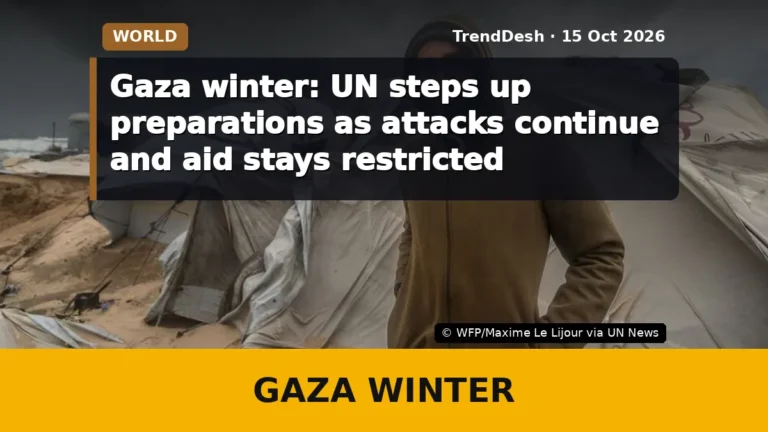
Gaza winter: UN steps up preparations as attacks continue and aid stays restricted
Gaza winter is close: OCHA says fuel, tarpaulins and winter clothing are not enough as strikes go on and access stays restricted…

Anil Menon spacewalk: NASA to preview the last two ISS solar array installs on 20 October
Anil Menon spacewalk: NASA will brief on US spacewalks 100 and 101 on 20 October, when Menon and Joshua Kutryk fit the…

Artemis III update: NASA to brief on its Moon timeline and next year’s test flight on 23 October
Artemis III update: NASA will brief on 23 October on its plan to fly four astronauts in low Earth orbit next year…
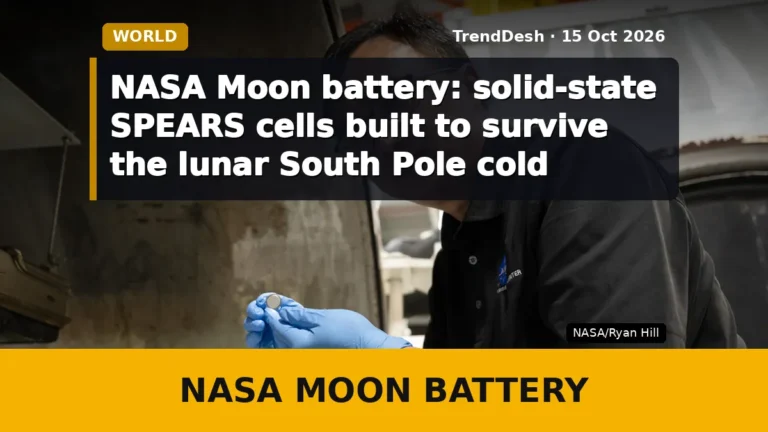
NASA Moon battery: solid-state SPEARS cells built to survive the lunar South Pole cold
NASA Moon battery: SPEARS solid-state cells worked down to minus 80 C in tests and survived 100 C to minus 170 C,…

Treble Clef in space: NASA’s Chandra finds a black hole outburst and cluster crash behind the shape
Treble Clef radio shape explained: NASA's Chandra and eROSITA show a black hole outburst and a galaxy cluster collision created the musical-looking…

Hurricane Simon weakens to 75 mph off Mexico as Baja California Sur told to stay alert
Hurricane Simon weakens to 75 mph off Mexico's Pacific coast; NHC says Baja California Sur should monitor it, days after it passed…
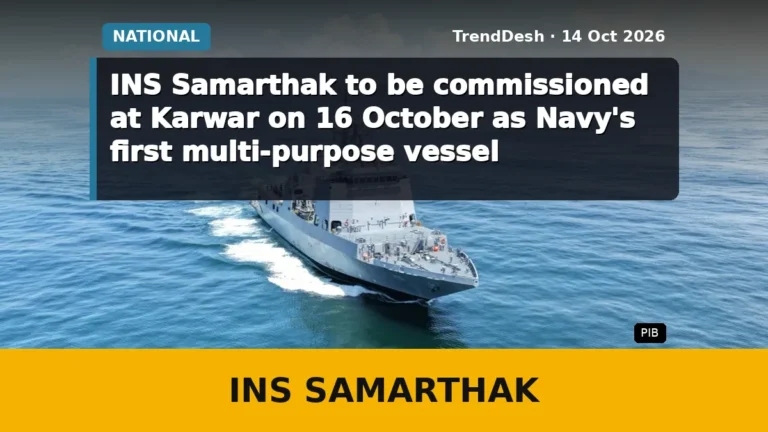
INS Samarthak to be commissioned at Karwar on 16 October as Navy’s first multi-purpose vessel
INS Samarthak, the first of four L&T-built multi-purpose vessels, will be commissioned at Naval Base Karwar on 16 October. Roles, crest and…
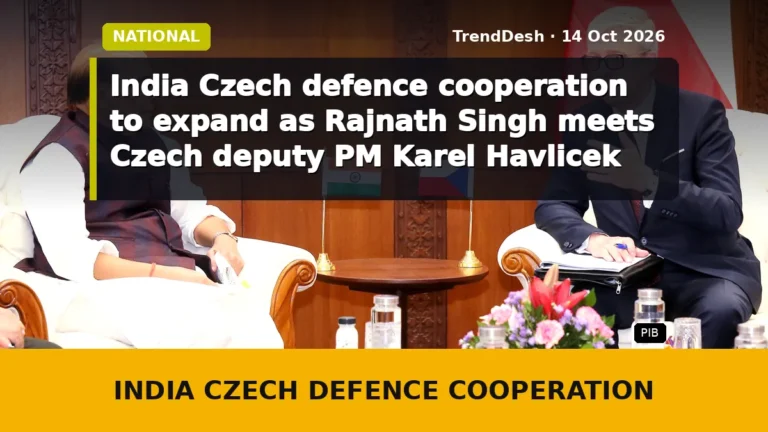
India Czech defence cooperation to expand as Rajnath Singh meets Czech deputy PM Karel Havlicek
India Czech defence cooperation: Rajnath Singh and Czech First Deputy PM Karel Havlicek agree to grow joint ventures under the Joint Defence…
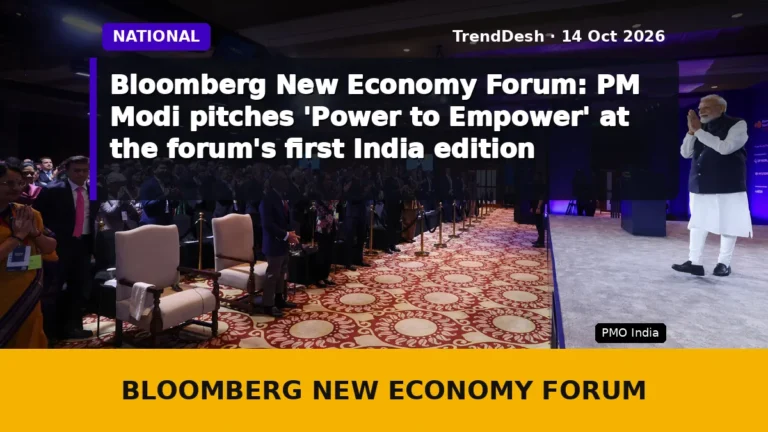
Bloomberg New Economy Forum: PM Modi pitches ‘Power to Empower’ at the forum’s first India edition
Bloomberg New Economy Forum 2026 in New Delhi: PM Modi sets out 'Power to Empower', cites 250 million out of poverty and…